
A silver-colored coin is not automatically a valuable silver coin. The difference between ordinary pocket change, melt-value bullion, and a desirable collector’s piece may be a tiny mint mark, an unusual date, a sharp edge, or a few points in condition grading. Those details can change the price from only a small premium over the metal value to hundreds or thousands of dollars.
Whether you are building a historical collection or buying tangible silver as an investment, the safest approach is to identify the coin before judging the price. The guide below explains what to inspect, how to purchase silver coins online without overpaying, and which questions separate a transparent seller from a risky listing.
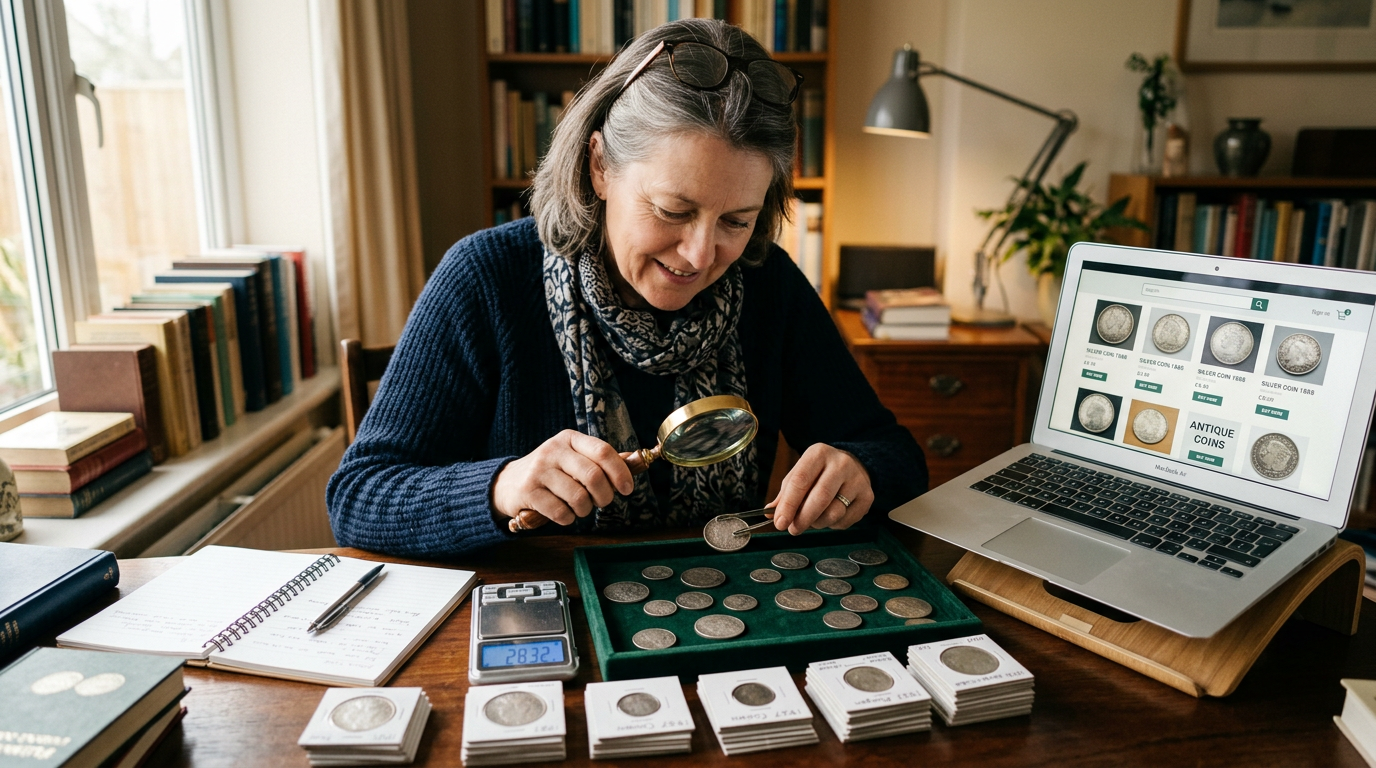
Start With the Coin’s Identity, Not Its Asking Price
Before comparing listings, record the coin’s denomination, date, mint mark, design, stated purity, and weight. A 90% silver U.S. dime, a .999 fine silver round, and a scarce proof issue may all be marketed as “silver coins,” but they have different pricing systems and buyer audiences.
Use a reputable reference catalog or grading-service database to confirm the specifications. Weight and diameter are especially useful first checks, although they do not prove authenticity by themselves.
- Government bullion coin: Typically has a stated weight and fineness, such as one troy ounce of .999 silver.
- Circulated historical coin: Its date, mint, rarity, and condition may matter more than its exact silver content.
- Silver round: Often tracks the metal price but is not legal-tender coinage and may have less resale recognition.
Next step: Write down the exact coin description and compare it with a trusted reference before looking at market prices.
Bullion and Numismatic Coins Reward Different Buying Strategies
Bullion coins are primarily priced from the spot price of silver plus a dealer premium. Numismatic coins are valued for scarcity, demand, design, provenance, and condition. Neither category is automatically better; the right choice depends on whether you want straightforward metal exposure, historical ownership, or both.
| Type | Main value driver | Typical buyer priority | Key tradeoff |
|---|---|---|---|
| Silver bullion | Silver spot price and premium | Low spread, recognizable products | Limited collector upside |
| Common circulated coin | Metal content and demand | Affordable fractional silver | Condition may add little |
| Rare or graded coin | Rarity, grade, eye appeal | Long-term collecting | Harder valuation and resale |
Investors often prefer standardized bullion because it is easier to compare and sell. Collectors may accept a larger premium for a scarce date or exceptional grade. Decide which pricing model you are buying into before placing an order.
A Small Mint Mark Can Change Rarity and Price
Mint marks identify where a coin was produced. On many U.S. coins, letters such as D, S, or O appear in different locations depending on the series. The same date from two mints can have dramatically different surviving populations, particularly when one facility produced fewer examples or when collectors assembled a specific date-and-mint set.
Do not assume that every unusual-looking letter is a valuable error. Compare the mark’s shape and position with authenticated reference images, and check whether the listing identifies a recognized variety.
- Inspect the mint mark under magnification, but do not clean or scrape the surface.
- Verify whether the date and mint combination is genuinely scarce in the coin’s grade.
- Look for documented varieties, doubled details, repunched mint marks, or overdates rather than vague “rare” claims.
When a price depends on a variety, ask the seller for clear photographs of the relevant area and the catalog or attribution used to support the premium.
Condition Grading Determines Whether Detail Becomes Value
Two coins with the same date and mint mark can have very different prices because wear, marks, luster, strike quality, and eye appeal affect collector demand. A circulated coin may be graded on a scale from About Good through About Uncirculated, while uncirculated coins are commonly described from Mint State 60 upward. Professional grading services encapsulate coins and assign a numerical grade, but the service and grade should still be verified.
| Condition clue | What to inspect | Buying implication |
|---|---|---|
| Heavy wear | Missing hair, feathers, lettering, or rim detail | Usually close to bullion or common-coin value |
| Light circulation | Visible design detail with contact marks | May carry a modest collector premium |
| Uncirculated | Original luster and limited handling marks | Premium depends strongly on grade and demand |
| Certified high grade | Sealed holder and matching certification record | Can command substantial premiums, but prices are volatile |
Budget for a certified coin only when the rarity and price justify the grading cost. A common coin in a plastic holder is not automatically a smart purchase.
Authenticity Checks Should Match the Coin’s Risk Level
Counterfeits are most dangerous when a coin’s rarity creates a large gap between metal value and market value. Common bullion is not risk-free, but scarce high-grade coins deserve more extensive verification. A convincing photograph cannot establish weight, dimensions, metal composition, or a legitimate certification record.
- Compare the stated weight and diameter with authoritative specifications; use a precision scale that measures to at least 0.01 gram for small coins.
- Check the edge for correct lettering, reeding, seams, filing, or casting bubbles.
- For expensive purchases, use professional authentication, a trusted local numismatist, or a recognized grading service.
- For slabbed coins, independently enter the certification number on the grader’s official website and compare the image when available.
Magnet tests can flag some base-metal counterfeits, but a failed magnet test does not prove genuineness. Avoid acid or destructive tests on collectible pieces. If a deal seems far below the established market range, treat that discount as a warning rather than an opportunity.
Online Seller Transparency Matters More Than a Polished Listing
Purchasing silver coins online is convenient, but online photos can hide scratches, discoloration, altered surfaces, or a different coin from the one pictured. A reliable seller makes the transaction auditable: the listing identifies the exact item, describes condition accurately, states shipping and return terms, and provides a secure payment path.
- Confirm the business identity, contact details, customer-service process, and independent review history.
- Determine whether the photograph shows the exact coin or a stock image.
- Read the return policy, including restocking fees, time limits, and who pays insured return shipping.
- Compare the final delivered price—not just the headline price—with two or three established dealers.
- Save the listing, invoice, photographs, and certification information for your records.
Marketplaces can offer variety, but seller ratings and platform protections vary. For a first purchase, a transparent specialist dealer may be worth a slightly higher premium than an anonymous bargain listing.
Compare Total Cost, Premium, and Resale Spread
The purchase price is only one part of the decision. Calculate the premium over the silver value, shipping, insurance, payment surcharge, taxes where applicable, and the likely buyback price. A coin with a low advertised premium may become expensive after fees, while a collectible coin may have a wider spread because fewer buyers understand its value.
| Purchase category | Common premium pattern | Primary cost drivers | Resale consideration |
|---|---|---|---|
| Generic silver rounds | Often among the lowest | Spot price, minting, dealer margin | May sell near bullion value |
| Recognized sovereign bullion | Moderate, sometimes higher during shortages | Brand recognition, demand, supply | Broad buyer familiarity |
| Common pre-owned silver coins | Varies by date and condition | Silver content, sorting, demand | Dealer may price by weight |
| Rare certified coins | Potentially substantial | Grade, rarity, auction demand, certification | Requires knowledgeable buyers |
Ask for the dealer’s current buyback quote on the same product. The difference between what you pay and what a dealer would pay today is a practical measure of liquidity.
Use a Deliberate Process Before You Purchase Silver Coins Online
A repeatable buying process reduces impulse purchases and makes it easier to compare vendors. Start with a defined purpose: accumulating ounces, collecting a series, gifting a historical piece, or diversifying a broader portfolio. Then choose products whose pricing you can independently verify.
- Set a budget: Decide the maximum all-in amount and whether purchases will be occasional or scheduled.
- Select a category: Separate bullion funds from numismatic collecting funds.
- Verify specifications: Check date, mint, purity, weight, diameter, and certification details.
- Benchmark the price: Compare recent dealer listings and, for rare pieces, completed auction results.
- Review protections: Confirm returns, shipping insurance, payment security, and delivery tracking.
- Inspect on arrival: Photograph the package, verify the item promptly, and retain documentation.
This process also helps prevent a common mistake: spending a collector’s premium on a coin you intended to buy only for its silver content.
Follow These Dos and Don’ts to Protect Collectible Value
Handling and storage can preserve the small details that distinguish a collector’s find. Silver naturally tarnishes, but removing that tarnish can leave hairlines or chemical damage that collectors value less than original surfaces.
Do:
- Hold coins by their edges with clean, dry hands or cotton gloves when appropriate.
- Store them in inert holders away from humidity, heat, PVC, and household chemicals.
- Keep receipts, provenance, grading records, and purchase dates.
- Use a professional appraisal before insuring or selling an expensive collection.
Don’t:
- Polish, dip, scrub, or use jewelry cleaner on collectible coins.
- Rely on a seller’s “rare” label without checking the exact variety.
- Assume a high grade guarantees profit or a rising market.
- Put all of your budget into one highly promoted coin without understanding its resale audience.
Preservation is not just cosmetic; it protects the evidence used to grade and price the coin.
Market Trends Affect Premiums, Demand, and Value Retention
Silver coin demand has a dual foundation: investors respond to the metal market, while collectors respond to scarcity, design, condition, and cultural interest. These forces can move in different directions. A rising silver price may lift bullion values but do little for a common collectible with weak demand. Conversely, a popular series can retain a premium even when spot silver is flat.
Premiums may widen during supply shortages, major economic uncertainty, or strong retail buying. They can narrow when dealers receive large inventories or when a product loses attention. Historical coins also face liquidity risk: a dealer’s offer may be well below a retail listing because the dealer must authenticate, market, and hold the item.
- Track spot silver separately from the coin’s numismatic premium.
- Review several months of comparable sales rather than one unusually high listing.
- Buy rare coins for knowledge and long-term interest, not a guaranteed return.
- Consider how easily the product can be authenticated and sold in your local market.
These distinctions make it easier to align each purchase with either value retention, collecting enjoyment, or both.
Frequently Asked Questions About Buying Silver Coins
Q: Is it safer to buy silver coins from a local shop or online?
A: Neither channel is automatically safer. A reputable local shop lets you inspect coins and discuss options, while an established online dealer may offer broader inventory and transparent price comparisons. Check reputation, return terms, authentication practices, and the final delivered price in either case.
Q: How can I tell whether a coin is silver?
A: Start with the date and specifications, then compare weight, diameter, edge, and design. Non-destructive tests can screen for problems, but valuable or disputed coins should be examined by a professional. Silver color alone is not evidence.
Q: Are graded coins always a better investment?
A: No. Certification can support authenticity and make condition easier to communicate, but the grading fee and premium may exceed the coin’s market benefit. Compare certified prices with recent sales of the same date, mint, variety, and grade.
Q: Should beginners buy bullion or rare coins?
A: Beginners often find recognizable bullion easier to price and resell. Rare coins can be rewarding, but they require study, careful authentication, and a realistic understanding of grading. Many buyers use bullion as a foundation and add numismatic pieces gradually.
Q: Does cleaning increase a coin’s value?
A: Usually not. Cleaning can create scratches or an unnatural surface and may result in a “details” grade. Leave potentially valuable coins untouched until a qualified numismatist advises otherwise.
Make the Next Purchase With a Written Checklist
The tiny detail that creates value is rarely a secret—it is usually a verifiable fact: a scarce mint mark, an intact original surface, a documented variety, or a historically important issue. The buyer’s advantage comes from slowing down long enough to identify that fact and price it correctly.
Before ordering, write down the coin’s specifications, target price, expected silver content, seller’s return policy, and authentication plan. If you cannot explain why the coin costs more than its melt value, treat it as bullion or keep researching. A deliberate comparison of trusted vendors, grading evidence, market data, and resale terms turns online buying from a gamble into a controlled collecting or investing decision.